
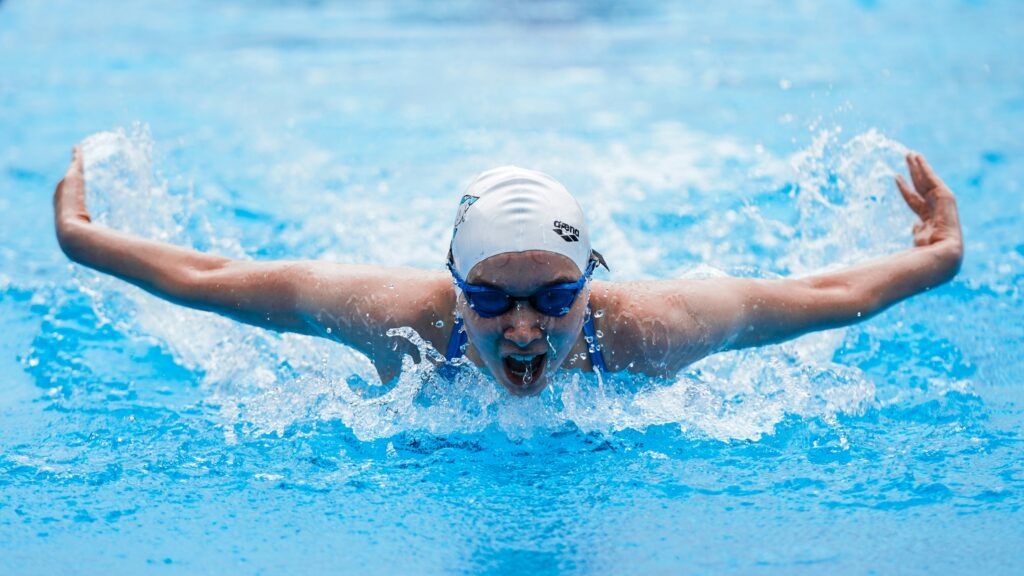
Can Water-Based Exercise Control Blood Sugar as Well as the Gym? A New Meta-Analysis Has the Answer
For people with type 2 diabetes who struggle with joint pain, obesity, or mobility problems, traditional exercise can feel impossible. A new systematic review and meta-analysis examines 11 randomised controlled trials and finds that aquatic exercise delivers meaningful blood sugar benefits — comparable to land-based exercise — without the physical barriers.
Type 2 diabetes affects hundreds of millions of people worldwide. The prescription is well established: at least 150 minutes of moderate-to-vigorous exercise per week, combined with resistance training. The problem is equally well established: for many people with type 2 diabetes, land-based exercise is genuinely difficult. Obesity stresses the joints. Neuropathy affects balance. Musculoskeletal pain turns a brisk walk into an ordeal. And so the exercise prescription goes unfulfilled — with serious consequences for long-term health.
Aquatic exercise — pool-based aerobics, deep-water running, underwater treadmill training — offers a compelling theoretical alternative. But does the evidence support it? A systematic review and meta-analysis from the University of Porto, published in Healthcare, has assembled the most comprehensive quantitative synthesis to date and arrives at an encouraging answer.
Why Type 2 Diabetes Demands Exercise — and Why Exercise Is Hard
HbA1c — glycated haemoglobin — is the key long-term measure of blood glucose control in type 2 diabetes. It reflects average blood glucose levels over approximately 2–3 months and is the primary target of diabetes management. A reduction of even 0.5–1.0% in HbA1c is considered clinically meaningful: it translates to meaningfully reduced risk of microvascular complications including retinopathy, nephropathy, and neuropathy.
Exercise improves HbA1c through multiple mechanisms: enhancing insulin sensitivity in muscle tissue, promoting glucose uptake during activity, reducing body fat, and improving cardiovascular function. Current guidelines from the American Diabetes Association and WHO recommend 150+ minutes of moderate-to-vigorous aerobic exercise weekly, plus resistance training.
Despite strong clinical evidence and clear guidelines, many people with type 2 diabetes face real barriers to land-based exercise that go far beyond motivation. Obesity increases joint loading, making walking or running painful. Peripheral neuropathy impairs balance and proprioception. Musculoskeletal comorbidities — common in this population — make high-impact exercise difficult or contraindicated. These are not excuses; they are physiological realities that a well-designed exercise alternative can address.
Why Water Might Be the Answer: The Physics of Aquatic Exercise
Water buoyancy reduces the effective weight a person’s joints must support. Submerged to the waist, body weight is reduced by approximately 50%; submerged to the neck, by around 90%. This dramatically reduces joint stress, making movement comfortable for people with obesity or musculoskeletal pain.
Water is approximately 800 times denser than air. Every movement in water meets resistance in all directions simultaneously — meaning that simple movements like walking, arm raises, and leg kicks provide genuine muscular loading. This enables both aerobic and resistance training within a single low-impact medium.
Water transfers heat approximately 25 times more efficiently than air, helping maintain core body temperature during exercise. This can improve exercise tolerance and comfort, particularly for people who struggle with heat during exertion — a common issue in diabetes.
Immersion creates hydrostatic pressure that supports venous return and may reduce peripheral oedema. This can be particularly beneficial for people with diabetic complications affecting circulation in the lower extremities.
What Studies Were Included — and What They Tested
Researchers searched five major databases (MEDLINE, Cochrane CENTRAL, Scopus, Web of Science, and IEEE Xplore) from database inception through December 2025, following PRISMA 2020 guidelines. From 2,781 initial records, 11 randomised controlled trials involving 335 participants met final inclusion criteria.
- Countries: Thailand (4 studies), Iran (3), Australia, Brazil, Sweden, and USA (1 each) — a genuinely international evidence base
- Duration: All studies ran 8–12 weeks, with 3 sessions per week and sessions of 30–60 minutes
- Exercise types: Aerobic (aqua-aerobics, deep-water running, underwater treadmill, Nordic walking in water), resistance (hydrotherapy resistance), and combined formats
- Comparators: Standard care or no exercise (passive control) in 7 studies; land-based exercise programmes (active control) in 3 studies
- Primary outcome: HbA1c (glycated haemoglobin) as the gold-standard measure of 2–3 month blood glucose control
- Participants: Adults aged 35+, predominantly middle-aged and older, several studies targeting elderly populations or those with comorbidities such as heart failure or diabetic neuropathy
The Studies at a Glance
| Study & Country | N | Exercise Type | Comparator | Duration | HbA1c vs Control |
|---|---|---|---|---|---|
| Nuttamonwarakul 2012 (Thailand) | 40 | Aerobic | Standard care | 12 wks | ↓ Lower |
| Nuttamonwarakul 2014 (Thailand) | 19 | Aerobic | Land-based | 12 wks | = Similar |
| Delevatti 2016 (Brazil) | 21 | Aerobic | Land-based | 12 wks | ↓ Lower |
| Suntraluck 2017 (Thailand) | 29 | Aerobic | Land-based | 12 wks | = Similar |
| Conners 2019 (USA) | 26 | Aerobic | Standard care | 12 wks | ↓ Lower |
| Shourabi 2020 (Iran) | 39 | Resistance | Standard care | 8 wks | Not reported |
| Scheer 2020 (Australia) | 27 | Aerobic | Standard care | 8 wks | → No change |
| Salarinia 2023 (Iran) | 48 | Resistance | Standard care | 8 wks | ↑ Control better |
| Ploydang 2023 (Thailand) | 33 | Aerobic | Standard care | 12 wks | ↓ Lower |
| Bonab 2023 (Iran) | 60 | Combined | Standard care | 12 wks | Not reported |
The Core Results: Two Different Questions, Two Different Answers
The most important methodological decision in this meta-analysis was to split the studies by comparator type — because “does aquatic exercise work?” is actually two separate questions with different answers.
Significant reduction in HbA1c (95% CI: −1.21 to −0.32; p = 0.001)
A meaningful clinical effect — comparable to the HbA1c reductions reported for traditional land-based exercise programmes in previous meta-analyses (typically 0.5–0.7%)
⚠ High heterogeneity: I² = 89% — results varied considerably across studies
No significant difference (95% CI: −0.09 to 0.50; p = 0.167)
Aquatic exercise produces comparable effects to land-based exercise for glycaemic control. Neither is better. The pool produces the same HbA1c improvements as the gym.
✔ Zero heterogeneity: I² = 0% — very consistent finding across studies
The zero heterogeneity (I² = 0%) in the active comparator subgroup is particularly compelling. When studies compare aquatic to land-based exercise directly, they consistently find no meaningful difference — this is one of the most statistically consistent findings in the entire evidence base.
The Role of Wearable Technology: A Practical Finding
One distinctive aspect of this review was its examination of wearable devices in aquatic exercise contexts. Eight of the eleven studies used wearable heart rate monitors to regulate exercise intensity — a surprisingly high proportion given the technical challenges of waterproof monitoring.
Waterproof Polar heart rate monitors (FT7, Team 2 Pro, RS300X, H10) were the dominant technology across studies. They enabled continuous cardiovascular monitoring during pool sessions and standardised intensity prescription across participants.
No study independently tested whether wearable devices improved glycaemic outcomes. Their role was operational — standardising exercise intensity and ensuring participants worked at the prescribed training load. The devices were tools for delivering the intervention, not the intervention itself.
Continuous glucose monitoring (CGM) systems are increasingly used for diabetes management during physical activity — and some modern CGM devices are waterproof. Yet none of the included studies reported CGM use during aquatic exercise. This represents an unexplored but potentially valuable research and clinical frontier.
Why the Evidence Quality Is Rated “Low” — and Why That Matters
The GRADE certainty of evidence was rated “low” for both comparisons. Understanding why is important for interpreting what the study can and cannot claim:
- Risk of bias concerns: Most studies were rated as having “some concerns” in the RoB 2 assessment — particularly around the randomisation process and selective outcome reporting. One study was rated high risk due to inadequate random allocation.
- High heterogeneity (passive comparison): I² = 89% means results varied enormously across studies — some showed large benefits, some showed none. This inconsistency limits confidence in the pooled estimate even though it is statistically significant.
- Small sample sizes (active comparison): Only 3 studies with ~53 total participants compared aquatic to land-based exercise. Despite consistent results (I² = 0%), this is a small evidentiary base.
- What “low certainty” does NOT mean: It does not mean the finding is wrong. It means further research could potentially change the estimate. The direction of effect (aquatic exercise beneficial) is consistent; what remains uncertain is the precise magnitude.
Who Benefits Most — and Practical Considerations
The clinical implications are clearest for specific populations where land-based exercise faces the greatest barriers:
- People with obesity and type 2 diabetes — water buoyancy dramatically reduces joint loading, making sustained aerobic exercise achievable where land-based activity is painful or exhausting
- Diabetic neuropathy patients — impaired balance and proprioception make land-based exercise fall-risky. Water provides a supportive environment that reduces injury risk while still enabling training stimulus. The Shourabi 2020 study specifically targeted diabetic neuropathy patients.
- Older adults with multiple comorbidities — several included studies targeted elderly populations or those with concurrent heart failure. The Swedish study (Åsa et al.) specifically recruited heart failure plus T2DM patients.
- People who have failed or avoided conventional exercise programmes — the different environment, lower perceived exertion, and reduced pain may improve adherence for patients who have previously abandoned gym-based exercise
The study also makes clear that exercise intensity regulation matters. Eight of the eleven included studies used heart rate monitors precisely because aquatic exercise can be deceiving — the cooling effect of water and the mechanical support of buoyancy can mask perceived exertion, meaning participants may exercise at lower intensities than intended without objective monitoring. Heart rate guidance ensures the therapeutic training stimulus is actually being delivered.
What the Research Still Cannot Tell Us
The review is transparent about important unanswered questions. The optimal “dose” of aquatic exercise for type 2 diabetes — the ideal combination of frequency, intensity, duration, and modality — remains unclear because studies differed too much in design to compare rigorously. Whether benefits persist beyond 12 weeks is unknown (no included study ran longer). The independent contribution of wearable monitoring to outcomes has not been tested. And the specific advantages of aerobic versus resistance versus combined aquatic approaches have not been resolved.
None of the studies directly compared different aquatic exercise modalities against each other. We know that aquatic exercise works and is comparable to land-based exercise overall — but we do not know whether deep-water running, underwater treadmill training, aqua-aerobics, or water-based resistance training is most effective for HbA1c reduction. This is the key question for future well-designed trials to address.
Key Takeaways from the Research
- Aquatic exercise significantly reduces HbA1c compared with doing nothing: A mean difference of −0.76% — within the clinically meaningful range for type 2 diabetes management — was observed when aquatic exercise was compared to standard care or no exercise
- Aquatic exercise performs as well as land-based exercise: Three direct comparison trials consistently found no meaningful difference between pool and gym exercise for glycaemic control (I² = 0%). Neither modality is superior — they are equally effective alternatives
- This matters for patients who cannot or will not exercise on land: Joint pain, obesity, neuropathy, and balance impairment are common in type 2 diabetes and are real barriers to conventional exercise. Aquatic exercise removes these barriers without sacrificing the metabolic benefit
- Heart rate monitoring is standard practice and clinically important: 8 of 11 studies used waterproof HR monitors. Intensity regulation in water is non-trivial — without it, patients may underexercise while believing they are working hard
- The evidence quality is low — but consistently directional: The GRADE rating reflects methodological variability across studies, not uncertainty about the direction of effect. All available evidence points toward benefit. Larger, standardised trials are needed to quantify it precisely
- Continuous glucose monitoring in aquatic settings is an unexplored opportunity: No included study used CGM during water-based exercise. Modern waterproof CGM devices could transform both research and real-world monitoring of aquatic exercise intensity and acute glycaemic response
For people with type 2 diabetes who face real barriers to conventional exercise, the pool is not a second-best option. Based on current evidence, it is an equally effective one — and for many patients, it may be the only option they can actually sustain.

https://shorturl.fm/TSSlb
Thanks for comment